Historical Anime

Shouwa Genroku Rakugo Shinjuu: Sukeroku Futatabi-hen

Even after having risen to the utmost rank of shun'ichi, Yotarou struggles to find his own identity in the world of rakugo. Caught between his master's teachings and the late Sukeroku's unique style, his performance lacks an important ingredient—ego. And while his popularity packs the theaters, he is but one of the few; rakugo is under threat of being eclipsed.
Meanwhile Yakumo, regarded by many as the last bastion of preserving the popularity of rakugo, struggles to cope with his elderly state. Even though his performances are still stellar, he fears that he is nearing his limits. His doubts grow stronger as an old friend creeps ever closer. Konatsu, for her part, attempts to raise her son as a single mother, which Yotarou is heavily opposed to. Instead, he seeks to persuade her to marry him and in turn raise her son as his own.
In Shouwa Genroku Rakugo Shinjuu: Sukeroku Futatabi-hen, the curtains fall on Yotarou and Yakumo's story, tasked with restoring the near-obsolete art form as well as overcoming their internal conflicts.
(Source: MAL Rewrite)
Sennen Joyuu

Millenium Actress blurs the lines between the past and the present, and truth and fiction, when a documentary filmmaker fulfills his quest to find the legendary actress Chiyoko Fujiwara, and learn why she mysteriously vanished at the height of her brilliant career. When Chiyoko grants the filmmaker’s request, he, in turn, presents her with a token – a key she had lost and thought was gone forever. The filmmaker could not have imagined that the key would not only unlock the long-held secrets of Chiyoko’s life, but also his own.
(Source: Dreamworks)
Katsugeki Touken Ranbu

In 1863, Izuminokami Kanesada and his partner, Horikawa Kunihiro, arrive in the streets of Edo from the future to investigate their master's reports of an upcoming enemy invasion. As humanoid manifestations of the famous Toshizou Hijikata's swords, they have been tasked with protecting history from the Retrograde Army that seeks to alter it. Soon enlisting the help of other sword warriors, they continuously battle the mysterious army throughout the Bakumatsu period.
However, their journey will not be an easy one. Fraught with blood and betrayal in the chaotic era closest to their hearts, the duo will be forced to make difficult decisions with everything they care about on the line.
(Source: MAL Rewrite)
Mushishi Zoku Shou: Suzu no Shizuku

The anime adaptation of the final Mushishi manga arc. Ginko stumbles upon a young girl in a mountain with branches and leaves growing out of her body. He later realises that she is the lord of that mountain but finds it strange that a human like her was chosen as the lord. He later meets her older brother who has continued to search for her ever since she disappeared while she was accompanying him on a stormy day. The story is about that girl, Kaya, and how she is torn between continuing her duty as a mushi lord and returning back to her loving human family.
(Source: Anime News Network)
Princess Principal: Crown Handler 1
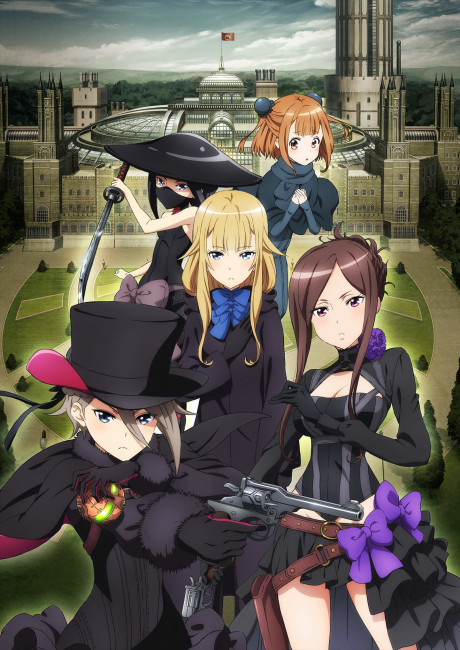
The first out of six movie sequels to the TV series.
The story is set in London at the end of the 19th century. A new task has been assigned to Team White Pigeon, a group of spies from the Commonwealth. It is a delivery of a used bookstore owner to the Commonwealth. Ange, Dorothy and Chise successfully recapture the owner, who had been held in a detention center by the Kingdom. Meanwhile, the "spy hunt" became more intense in the Kingdom following an assassination attempt on the queen, and tension is strained at Control in the Commonwealth. Control speculates that the spy who has dispatched to the royal family might be a "double agent." To find out the truth, they order Team White Pigeon to contact with the spy, whose codename is "Bishop." How their new mission will be accomplished? And who is "Bishop"?
(Source: Official Site)
Aoi Bungaku Series

The series consists of adaptations of six modern classics of Japanese literature: Osamu Dazai’s No Longer Human (Ningen Shikkaku) & Run, Melos! (Hashire, Melos!), Natsume Soseki’s Kokoro, Ryunosuke Akutagawa’s Hell Screen (Jigoku Hen) & The Spider's Thread (Kumo no Ito), and Ango Sakaguchi's In the Forest, Under Cherries in Full Bloom (Sakura no Mori no Mankai no Shita).
No Longer Human (Ningen Shikkaku) - A high school student becomes lost and alienated. Despondent and aimless, he falls into a cycle of self abuse, depression and drugs that taints his life for years. Told in three chapters, each chapter deals with a different point in his life and the final chapter leaves him standing alone - an empty and hollow charicature of his former self.
In the Forest, Under Cherries in Full Bloom (Sakura no Mori no Mankai no Shita) - A love story between a 12th-century woman and a mountain bandit who abducts her.
Kokoro - A 1914 tale of a young man's life journey during the Meiji era. The work deals with the transition from the Japanese Meiji society to the modern era, by exploring the friendship between a young man and an older man he calls "Sensei". It continues the theme of isolation developed in Soseki's previous works, here in the context of interwoven strands of egoism and guilt, as opposed to shame.
Run, Melos! (Hashire, Melos!) - An updated retelling of a classic Greek tale of the story of Damon and Pythias. The most prominent theme of "Run, Melos!" is unwavering friendship. Despite facing hardships, the protagonist Melos does his best to save his friend's life, and in the end his efforts are rewarded.
The Spider's Thread (Kumo no Ito) - The Buddha Shakyamuni chances to notice a cold-hearted criminal suffering in Hell. But this criminal did perform one single act of kindness in not stepping on a spider in a forest. Moved by this selfless act, Shakyamuni takes the silvery thread of a spider in Paradise and lowers it down into Hell, but it falls upon the criminal to seize the opportunity and pull himself out - if he can.
Hell Screen (Jigoku Hen) - A famous artist is commissioned by a great lord to create a series of paintings depicting scenes of the 'Buddhist Hell'. The artist is unable to paint scenes that he has not seen himself, prompting him to torture and torment the Lord's staff to create his imagined images of hell. His creative efforts taint the household, as the story descends into madness and destruction.
(Source: AniDB)
Mugen no Juunin: IMMORTAL

Damned to wander the Earth in an endless cycle of carnage and murder, the fallen samurai known as Manji seeks the chance to win back his mortality. To do so, he must first balance the deaths weighing against him by slaying 1000 evil souls, a task that would take even the greatest warriors a lifetime. Manji, however, has all the time in the world to kill, and his lonely quest leaves a trail of bloody bodies in his wake… until his path crosses with that of Rin, who has sworn vengeance against the murderers of her family and school, even though the cost will almost certainly be her own life.
(Source: Sentai Filmworks)
Omoide Poro Poro

Taeko Okajima is a typical "office lady" in a big company in a big city. When she takes a sabbatical to the countryside in Yamagata Prefecture, the hometown of her brother-in-law, the journey recalled her memory of her 5th grade year. During her stay in Yamagata, she works hard and happily as a farmer and is surrounded by friendly relatives and villagers, bringing up more memories. Their hospitality makes her to reconsider her choice of life.
(Source: Anime News Network)
Baccano! Specials

Three DVD-only episodes made from the light novels, which flesh out characters and plot events from the original series and establish closure to the story as Carol and the Vice President return to New York.
Joker Game

In 1937, before World War II begins in earnest. Lieutenant Colonel Yuuki of the Imperial Japanese Army forms the "D Agency," an army intelligence outfit under his command and tutelage. Army General Staff attaches Lieutenant Sakuma to observe the unit's performance. D Agency casts a wide net to find agents beyond Japanese military personnel, and Yuuki establishes D Agency's tenets, which go against IJA doctrine: "Don't kill, don't get killed, don't get captured." With this, Yuuki trains a team of operatives who conduct missions against domestic and foreign powers.
(Source: Anime News Network)
Mo Dao Zu Shi 3

The third season of Mo Dao Zu Shi.
Along an empty road in the rural countryside, Wei Wuxian and Lan Wangji stumble across a stone plaque that reads "Yi City." Still on their quest to unravel the mystery behind the cursed severed arm, they venture into the deserted city to obtain further leads.
However, with the appearance of a mysterious new cultivator, the demonic arm investigation leads Wei Wuxian and Lan Wangji to a plot that threatens the cultivation world as they know it. The gravity of the new situation escalates when the two find it involves the chief cultivator of the renowned Lanling Jin Sect—Jin Guangyao.
As the pair continue to piece together the crucial conspiracies of the cultivation history, their friends and colleagues grow suspicious of their motives. With the world against him, Wei Wuxian must prove he is not the demonic sorcerer people believe him to be to regain their trust and save the cultivation world from the sinister evil lurking within it.
(Source: MAL Rewrite)
Reikenzan: Hoshikuzu-tachi no Utage

Since its founding in the year 4233 of the Nine Provinces calendar, the spirit sword clan has been producing first-class martial arts talent. Two thousand years later, the clan, which adheres to the principles of peace and spiritual development, seeks to find new disciples by holding a grand tournament. One of these candidates is 12-year-old Wang Lu.
Douluo Dalu

Tang San spent his life in the Tang Outer Sect, dedicated to the creation and mastery of hidden weapons. Once he stole the secret lore of the Inner Sect to reach the pinnacle of his art, his only way out was death. But after throwing himself off the deadly Hell's Peak he was reborn in a different world, the world of Douluo Dalu, a world where every person has a spirit of their own, and those with powerful spirits can practice their spirit power to rise and become Spirit Masters.
The spirit that awakens within Tang San is Blue Silver Grass, a useless spirit. Can he overcome the difficulties to reach the high ranks of Spirit Masters and bring the glory of the Tang Sect into this new world?
(Source: AniDB)
Biao Ren
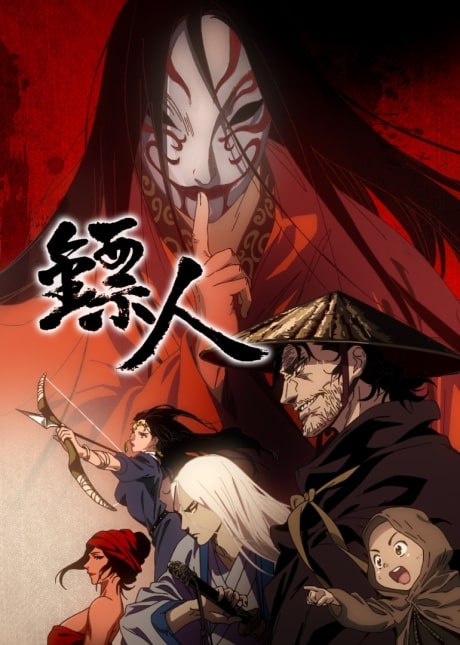
‘Escort’, refers to paid warriors, their targets of protection, are also referred to targets that are wanted by the government. On the eve of civil chaos during the last years of Sui dynasty, with the rise of a reign of terror around the country, various peoples’ feelings of grudge and animosity develop…
Versailles no Bara (Movie)

Hoping to unite their countries with an alliance, The Empress of Austria arranges her daughter, the delightful yet spoiled Marie Antoinette, to marry the crown prince of France, Louis XVI. Upon arriving in Versailles, the Austrian princess meets Oscar Francois de Jarjayes, Captain of the Royal Guards—a seemingly dashing young man—but to Antoinette's astonishment, he is in fact a woman!
The youngest daughter of a noble family with a prominent lack of a male heir, Oscar was raised as a boy to continue the family's military legacy. Suffocated by the rigid rules associated with her new position and longing for companionship, Antoinette immediately takes a liking to this intriguing young woman, and wastes no time befriending her. However, as the childish new queen foolishly abuses her power, Oscar is conflicted between maintaining her loyalty to the royal family and addressing the growing concern of poverty among the common people.
Recalling the events of the French Revolution, Versailles no Bara depicts the struggles of two women unjustly burdened by family expectations. Yet, despite being forced to deny their identities at the expense of personal happiness, they march on to become key players in the annals of history.
(Source: MAL Rewrite)
Mushishi Zoku Shou: Odoro no Michi

Unaired episode of Mushishi Zoku Shou bundled with anime's third Blu-ray/DVD volume.
Adapts "Odoro no Michi" (Path of Thorns) manga chapters.
(Source: AniList.co)
Wu Shan Wu Xing: Zhuo Yuan Shen Huo

A legend tells that a long time ago, monsters could give the ability to master the five elements to certain elected officials. But for that, you have to go through the dangerous foggy mountains...
We follow the adventures of one of these elected officials.
(Source: AniList.co)