TV Short Anime


aiseki MOGOL GIRL

The series features colorful stop-motion mascot characters made out of pipe cleaners. In Japanese, "aiseki" refers to the situation of sharing a table at a restaurant with a person you don't know. The show is surreal datsuryoku-kei comedy with a variety of male guest voice actors who banter with Fuyumi and Haruko at a table in the Mogol Cafe.
Digi-girl Pop!

One fine day, a robot by the name of "Digi-girl" fell from the sky and landed near the nail-saloon operated by Nails, a nail-artist who likes all things pretty. Nails took Digi-girl in, hoping that she can help out with the household chorse. However, much to her desperation, the latter is completely useless with cleaning matters and constantly fumbles with dire results. On top of that, she creates a commotion where-ever she goes, be it in school or on the streets. This is a cute and "pop" story about a robot girl mixing together with other peculiar townsfolk.
(Source: Anime News Network)
Dibetagurashi: Ahiru no Seikatsu
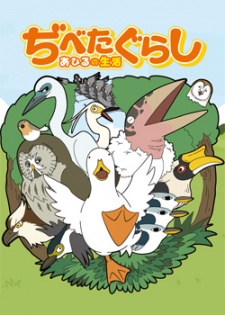
The story follows the daily life of a group of birds, including a duck, an old nihilistic great grey owl, and a gluttonous Caique parrot.
(Source: Anime News Network)
Aka-chan Honbuchou

The story centers on Takeda, a 47-year-old general manager of a company who one day is turned into a baby (despite his mental age remaining the same) and the antics of him and his subordinates.

Hyper Positive Yogoremon

A collaboration between FIREBUG, Fuji TV, and Bandai: Hyper Positive Yogoremon centers on Otarou, a creature themed around dirt known as a yogoremon. It and other yogoremon will ask the meaning of words and explain negative terms in positive ways. The shorts are also posted on the official CreepHyp YouTube channel.
(Source: Anime News Network, edited)
Little Charo: Touhoku-hen

Charo venture around Tono, Iwate, a city in Japan's Tohoku (Northeast) region, attempting to find the Eight-Starred Note in order to prevent the reappearance of the Tenaga-Ashinaga monster of local legend.
(Source: Anime News Network)

Little Charo 2

NHK's English education program. In Little Charo 2, the puppy journeys with his master through a mysterious place called the Middle World, which lies between the World of the Living and the World of the Dead.
(Source: AniDB)
Little Charo

NHK's English education program featured the adventures of a puppy named Charo in New York.
Saa Ikou! Tamagotchi

Let's Go! Tamagotchi is an anime series focusing on the lives of Mametchi, Memetchi, Kuchipatchi, ChaMametchi, and their friends. The series premiered in Japan in December 2007, while an English dub was uploaded by Bandai in December 2008. It was originally uploaded a week before the release of the first movie in Japanese.
Kayoe! Chuugaku

Wada transfers from the Kansai region to the Toukai region in middle school. The story follows his new set of friends as their fivesome enjoy their everyday lives. All the characters' are names are based on Chunichi Dragons baseball team which is located in the Toukai region.
(Source: AniDB)
Ukkari Pénélope

Meet Penelope, the absent-minded young koala. Rarely seen without Deudeu – her favourite stuffed rabbit – Penelope likes nothing more than finding another adventure in the most unlikely of places. A simple gust of wind blowing her hat away can lead to Penelope running her own stall atop a tree stump where she trades flowers for apples, and paper planes for acorns. From games of hide and seek with her friends, to playing with the bubbles in the bath or counting sheep during nap time, Penelope’s life is never dull – even if she does wear odd socks when she gets herself dressed in the morning.
(Source: Anime-Planet)
Ukkari Pénélope (2009)

Ukkari Penelope is about a young koala's daily adventures. The narrator is Mamiko Noto!

Line Offline: Salaryman

The anime shorts are set in the fictional Line Corporation with a motley crew of idiosyncratic workers. There is the narcissistic section head and president's son James, the subsection head Moon (who is always gone somewhere but somehow gets his work done), the quiet but kindhearted subsection head Brown, and the subordinate Connie who is in an endless loop of yo-yo diets and weight gains.
(Source: Anime News Network)
Awajishima no Shichifukujin

The story centers on the Seven Gods of Fortune in Japanese mythology as they reside on Awaji Island in Hyogo. In the shorts' story, the Seven Gods of Fortune slack in their duties in heaven, and Susanoo-no-Mikoto banishes them to Awaji Island. In order to return to the heavenly realm, they must help bring happiness to humans and rebuild their virtue. The outcast gods reluctantly grant human wishes and accumulate points in their "god phones" to be able to return to heaven. They aim to perform good deeds on particularly auspicious days to maximize point accumulation. Despite their best efforts at accumulating virtue, sometimes the Seven Gods of Fortune end up bringing misfortune to humans. When they fail, they lose points, further prolonging their stay on Awaji Island.
(Source: Anime News Network)